


I’m Not Panicking About the CLARITY Vote, and Neither Should You
By Don Friedman | CEO, Digital Assets Council of Financial Professionals
September 15, 2026
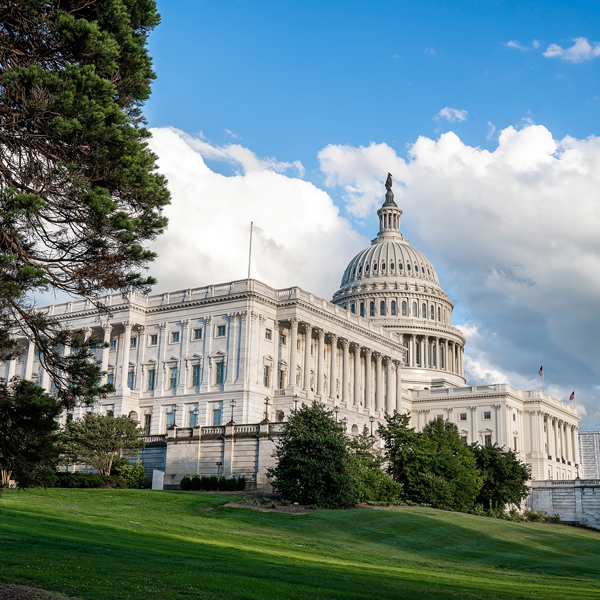
The Senate couldn’t find 60 votes for the CLARITY Act. After more than a year of negotiation, a committee markup and a procedural vote that finally made it to the floor, the most significant piece of crypto market structure legislation in American history has stalled — perhaps for this Congress, perhaps for longer.
I wanted it to pass. And in the weeks and months leading up to the vote, I heard from advisors who wanted to know whether a failed vote would change the answer they give clients about digital assets.
It doesn’t. Let me explain why.
 We’ve all watched this industry get written off time and time again. Many of the obituaries rested on the same premise: treating Washington’s approval as the thing that legitimizes digital assets. It never was. And nothing about the last twelve months depended on a cloture vote.
Start with the regulators, because they stopped waiting on Congress long before Congress stopped moving.
On August 18, the SEC proposed Regulation Crypto Assets — the agency’s first formal rulemaking aimed squarely at crypto offerings, after a decade of governing this asset class through speeches, interpretive guidance and enforcement actions. The proposal rests on the premise that a crypto asset is not itself a security but becomes the subject of an investment contract when the buyer is relying on someone else’s efforts to make it valuable. It creates two registration exemptions — one for startups raising up to $5 million over four years, another allowing up to $75 million in any 12-month period —and a safe harbor that lets a token stop being treated as a security once the promises behind it have been delivered. It would also override state-by-state registration requirements for offerings made under the new rules, collapsing fifty compliance regimes into one.
And on September 1, the SEC proposed the first rewrite of the transfer agent rules since the 1970s. This would allow a blockchain to serve as an issuer’s official ownership record.
I’ve read SEC guidance on crypto over the years. This is the first time I’ve read something and thought: a lawyer could actually work with this.
On August 20, CFTC Chairman Michael Selig told his agency’s new Innovation Advisory Committee that he’d directed staff to begin drafting crypto market structure rules under the CFTC’s existing authority. The approach under consideration would let today’s crypto exchanges register as a new kind of designated contract market — a “crypto asset market” — offering leveraged and margined trading under CFTC oversight. Selig said if CLARITY stalled, the CFTC would move anyway.
CLARITY stalled. So now we’ll find out whether he meant it.
Meanwhile — and this is the part I’d focus on with any skeptic — the plumbing of American capital markets is being rebuilt on the assumption that tokenization is here to stay.
DTCC, which custodies more than $100 trillion in assets, launched a pilot program of tokenized securities in July and in October is scheduled to do a full commercial rollout. Look at who’s at the table: BlackRock, Goldman Sachs, JPMorgan, Franklin Templeton, Invesco, Schwab, Citadel Securities, Nasdaq, NYSE Group, Robinhood, Tradeweb — sitting alongside crypto-native firms including Circle, Fireblocks, Ripple and Payward, the parent of Kraken. Fifty-plus firms do not co-build shared settlement infrastructure as a hedge.
The SEC has approved Nasdaq’s framework for tokenized equity settlement, letting tokenized shares trade alongside conventional ones under the same tickers with the same investor rights. Nasdaq’s 23/5 trading goes live December 6. ICE, the NYSE’s parent, is building a tokenized equity venue open 24/7 including weekends and holidays, with instant settlement and fungibility preserved between tokenized and traditional shares.
Not one of those projects was waiting on the Senate.
Then there’s the adoption data, which I find quite interesting because 2026 has been a punishing year for prices. As of this writing, bitcoin trades around $76,000, roughly 40% off its October 2025 high, and it slid again on Tuesday’s news — in a week that also brings an expected Fed hike and oil above $100. If adoption tracked price, it should be in retreat.
It isn’t. Bitcoin addresses holding a non-zero balance numbered roughly 57 million this summer, up from fewer than 10 million in 2017, with the network adding roughly 150,000 a month straight through the drawdown.* Stablecoin supply sits above $300 billion, up about 14% year over year, holding near record levels while prices fell — a decoupling from the crypto cycle that simply didn’t happen in prior bear markets. Tokenized real-world assets, excluding stablecoins, have roughly tripled in a year to more than $30 billion, led by tokenized Treasuries. The key is the upward trajectory, and its persistence through a roughly 40% drawdown. That’s what infrastructure adoption looks like. It behaves differently from speculation.
Congress has passed crypto legislation before. Stablecoins already have a federal framework: the GENIUS Act, signed in July 2025. CLARITY would have been the second crypto statute, not the first.
Don’t get me wrong though, losing CLARITY costs us something real. Rulemaking takes years, invites litigation, and can be unwound by the next administration far more easily than an act of Congress can be undone. Selig made that case himself — he argued that legislation was the surest protection against another regulator running a campaign of enforcement-by-lawsuit, and he’s right. The SEC’s proposal doesn’t answer structural questions – who can run an exchange, who has to register as a broker-dealer. Where the SEC’s authority ends and the CFTC’s begins is still a matter of interpretation rather than law. I’m not going to tell you the regulatory question is settled, because it isn’t.
What I will tell you is that the question has narrowed enormously. Two years ago, we were debating whether the United States would permit a digital asset industry to exist. Today we’re debating which agency writes which rules, and how fast. That’s a different conversation, and it’s largely beside the point for what’s about to show up on client statements.
In October, tokenized securities become a standard option at the depository (DTC) sitting underneath nearly every trade your clients make. In December, Nasdaq extends trading to 23 hours a day. Your clients are going to encounter tokenized share classes, stablecoin settlement and weekend markets, and they’re going to ask you what those are.
“I’m waiting on Congress” was never a good answer. Now it isn’t even an available one.
*One person can control hundreds of addresses, but an exchange can also hold millions of customers in a handful of wallets — it cuts both ways. Estimates vary by tracker.
Image credit: wirestock – Magnific.com
The views and opinions expressed in this article are solely those of the author and do not necessarily reflect the position of DACFP or its affiliates. This content is provided for educational and informational purposes only and does not constitute investment, financial, legal, tax, or accounting advice, nor an offer, solicitation, or recommendation to buy or sell any security or other asset. Information is current as of the date of publication and may become outdated; no representation is made as to its accuracy or completeness. Publication does not constitute an endorsement of the author, the author’s firm, or any product or service referenced, and the author may hold positions in the assets discussed. Readers should consult their own qualified professionals before making any financial decisions.